Henry died in 1547, while the palace was still incomplete. Over the next hundred years or so, the British flip-flopped first between Catholicism and Protestantism, and then secondly over whether or not to have a monarchy. After fighting a civil war and beheading the King, Charles I, the monarchy was later restored and Charles II was crowned. By the time it was handed back to the King, the palace had fallen into disrepair, and he gave it to his mistress. She then set about deconstructing the palace and selling off the building materials to pay off her gambling debts.
Nonsuch Palace was a Tudor royal palace, built by Henry VIII in Surrey, England; it stood from 1538 to 1682–3. Its site lies in Nonsuch Park on the boundaries of the borough of Epsom and Ewell in Surrey and the London Borough of Sutton.
Château de Chambord
The Château de Chambord at Chambord, Loir-et-Cher, France, is one of the most recognisable châteaux in the world because of its very distinctive French Renaissance architecture which blends traditional French medieval forms with classical Renaissance structures. The building, which was never completed, was constructed by King Francis I of France.
Chambord is the largest château in the Loire Valley; it was built to serve as a hunting lodge for Francis I, who maintained his royal residences at the châteaux of Blois and Amboise. The original design of the Château de Chambord is attributed, though with some doubt, to Domenico da Cortona; Leonardo da Vinci may also have been involved.
Field of the Cloth of Gold
The Field of the Cloth of Gold (French: Camp du Drap d'Or) was a site in Balinghem – between Ardres in France and Guînes in the then-English Pale of Calais – that hosted a summit from 7 to 24 June 1520, between King Henry VIII of England and King Francis I of France.
The summit was arranged to increase the bond of friendship between the two kings following the Anglo-French treaty of 1514. These two monarchs would meet again in 1532 to arrange Francis's assistance in pressuring Pope Clement VII to pronounce Henry's first marriage as illegitimate. Under the guidance of English Cardinal Thomas Wolsey, the chief nations of Europe sought to outlaw war forever among Christian nations.
Italian War of 1542–46
The Italian War of 1542–46 was a conflict late in the Italian Wars, pitting Francis I of France and Suleiman I of the Ottoman Empire against the Holy Roman Emperor Charles V and Henry VIII of England. The course of the war saw extensive fighting in Italy, France, and the Low Countries, as well as attempted invasions of Spain and England. The conflict was inconclusive and ruinously expensive for the major participants.
The war arose from the failure of the Truce of Nice, which ended the Italian War of 1536–38, to resolve the long-standing conflict between Charles and Francis—particularly their conflicting claims to the Duchy of Milan.
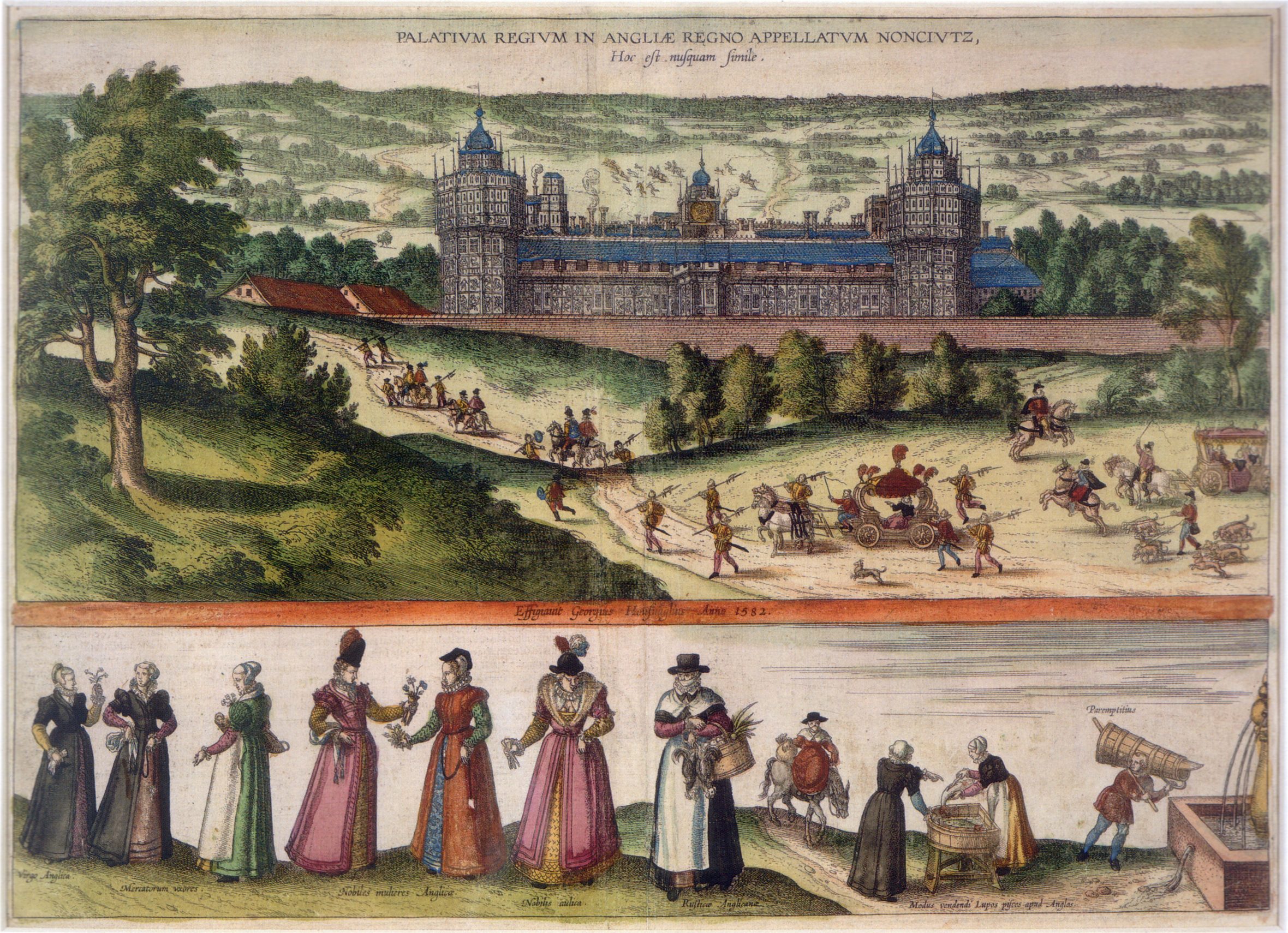
Wiki link. Commissioned by Henry VIII, construction began in 1538 of a palace intended to be unmatched in the known world for it's splendour; Or perhaps more specifically, more splendid than anything the French had. Francis I of France was a great personal and diplomatic rival of Henry, and they spent years wrestling for dominance alongside the Holy Roman Empire, led at the time by Spain. The political manoeuvring meant alternately signing treaties and swearing eternal friendship with one of their rivals, then turning around and then reneging on their prior promises, even fighting expensive yet inconclusive wars..
Henry died in 1547, while the palace was still incomplete. Over the next hundred years or so, the British flip-flopped first between Catholicism and Protestantism, and then secondly over whether or not to have a monarchy. After fighting a civil war and beheading the King, Charles I, the monarchy was later restored and Charles II was crowned. By the time it was handed back to the King, the palace had fallen into disrepair, and he gave it to his mistress. She then set about deconstructing the palace and selling off the building materials to pay off her gambling debts.
Nonsuch Palace
Nonsuch Palace was a Tudor royal palace, built by Henry VIII in Surrey, England; it stood from 1538 to 1682–3. Its site lies in Nonsuch Park on the boundaries of the borough of Epsom and Ewell in Surrey and the London Borough of Sutton.
Château de Chambord
The Château de Chambord at Chambord, Loir-et-Cher, France, is one of the most recognisable châteaux in the world because of its very distinctive French Renaissance architecture which blends traditional French medieval forms with classical Renaissance structures. The building, which was never completed, was constructed by King Francis I of France.
Chambord is the largest château in the Loire Valley; it was built to serve as a hunting lodge for Francis I, who maintained his royal residences at the châteaux of Blois and Amboise. The original design of the Château de Chambord is attributed, though with some doubt, to Domenico da Cortona; Leonardo da Vinci may also have been involved.
Field of the Cloth of Gold
The Field of the Cloth of Gold (French: Camp du Drap d'Or) was a site in Balinghem – between Ardres in France and Guînes in the then-English Pale of Calais – that hosted a summit from 7 to 24 June 1520, between King Henry VIII of England and King Francis I of France.
The summit was arranged to increase the bond of friendship between the two kings following the Anglo-French treaty of 1514. These two monarchs would meet again in 1532 to arrange Francis's assistance in pressuring Pope Clement VII to pronounce Henry's first marriage as illegitimate. Under the guidance of English Cardinal Thomas Wolsey, the chief nations of Europe sought to outlaw war forever among Christian nations.
Italian War of 1542–46
The Italian War of 1542–46 was a conflict late in the Italian Wars, pitting Francis I of France and Suleiman I of the Ottoman Empire against the Holy Roman Emperor Charles V and Henry VIII of England. The course of the war saw extensive fighting in Italy, France, and the Low Countries, as well as attempted invasions of Spain and England. The conflict was inconclusive and ruinously expensive for the major participants.
The war arose from the failure of the Truce of Nice, which ended the Italian War of 1536–38, to resolve the long-standing conflict between Charles and Francis—particularly their conflicting claims to the Duchy of Milan.
^[ ^PM ^| ^Exclude ^me ^| ^Exclude ^from ^subreddit ^| ^FAQ ^/ ^Information ^| ^Source ^] ^Downvote ^to ^remove ^| ^v0.27